HISTORY OF THE BROWN BERETS
"Serve — Observe — Protect"

BORN FROM THE STRUGGLE
(Birth of a New Symbol)
The Brown Berets emerged in 1966 from East Los Angeles, California, forged by young Chicano (Mexican) activists who refused to accept systemic educational inequalities, police brutality, and disproportionate casualty rates of Chicanos on the frontlines of the Vietnam War. While Chicanos constituted roughly 10% of the U.S. population, Raza accounted for 20% of the deaths in Vietnam.
Inspired by the broader civil rights movement and the realities of barrio life, the organization grew into one of the most significant Chicano Civil Rights forces in U.S. history — organizing walkouts, building free clinics, and leading tens of thousands in the non-violent Chicano Moratorium Protest March.
Their motto — Serve, Observe, Protect — defined a generation of Chicano resistance and continues to guide the Chicano movement today across chapters nationwide.
BROWN BERET COAT OF ARMS
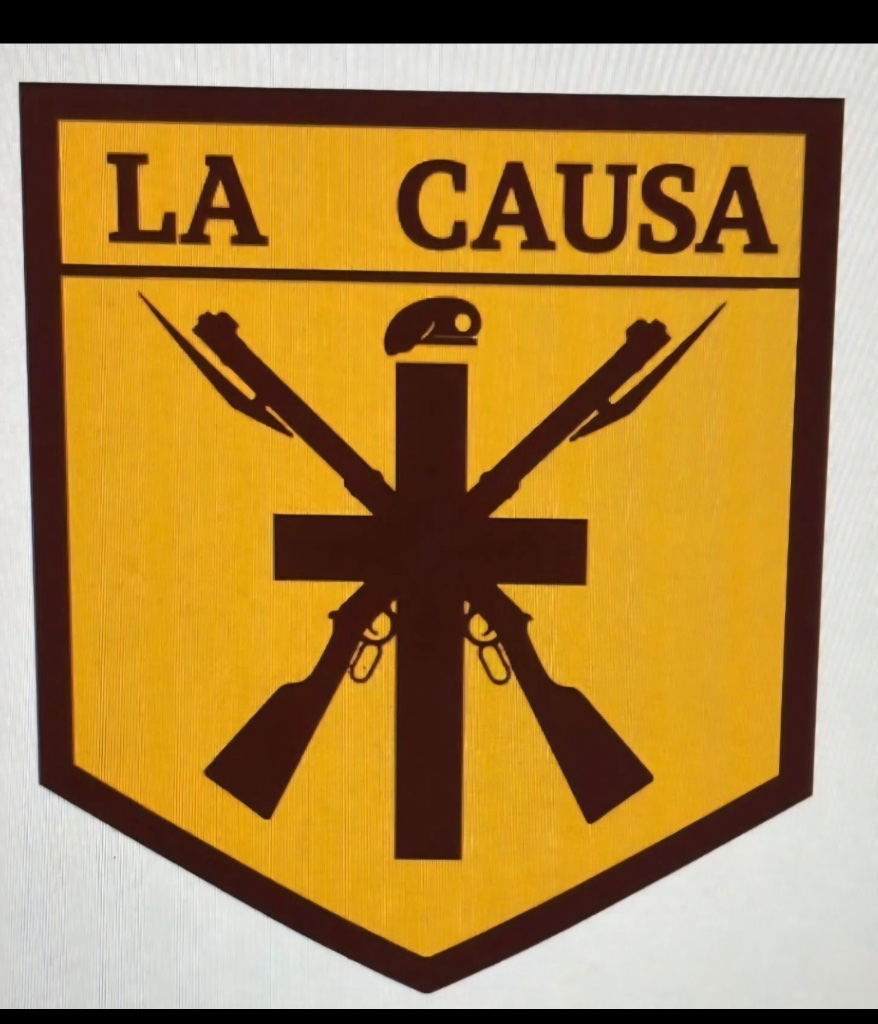
A gold patch bears the words "La Causa" (The Cause). The symbol is a cross with two rifles crossed over it and a beret above it. This represents the fight for Social Equality, Social Justice, and Self-Determination for the Chicano.
- The Brown Beret: Represents our structure and organization
- The Brown: Represents our Raza (Mexican People)
- The Gold: Representative of our proud pre-Columbian history
- The Cross: Represents our beliefs, our commitment, and sacrifices to our Raza and Tierra
- The Rifles: Represent our military structure and our commitment to the service and protection of our Raza
The Coat of Arms Patch should be earned, never given.
"The Coat of Arms Patch should be earned, never given."
Dr. David J. Sanchez, PhD — Founder & Prime Minister, Brown Beret National Party (Est. 1967). Designer and original bearer of the La Causa Coat of Arms.
TIMELINE
Young Mexican American Citizens for Community Action
A group of young Mexican Americans in East Los Angeles formed the YCCA, initially working within the system to address educational inequality and discrimination.
Birth of the Brown Berets
Under the leadership of David Sanchez, the Young Chicanos for Community Action transformed into a non-violent military structure known as the Brown Berets. Inspired by the 1960s Civil Rights Movement, UMAS-Movimiento Estudiantil Chicano de Aztlan (MeCha) in San Jose — which wore Blue Berets — the American Indian Movement, and the military faction Green Berets.
East LA Walkouts (Blowouts)
The Brown Berets played a central organizing role in the East L.A. school walkouts, where over 10,000 Chicano students walked out of five high schools to protest racist educational policies, overcrowded classrooms, and a 60% dropout rate. This became one of the largest student protests in American history.
La Causa Newspaper
The Brown Berets launched La Causa, their official newspaper, to spread awareness about Chicano civil rights, police brutality, and community organizing. The publication reached thousands across the Southwest.
Free Clinic Established
The Brown Berets opened the East Los Angeles Free Clinic (El Barrio Free Clinic), providing healthcare to the underserved Chicano communities. This was a groundbreaking community service initiative of its time. Due to other factions within the Brown Berets who took to Communism and faulty practices, the FBI seized the facility, and it was transformed into Alta Med, a multimillion-dollar Medical Group today.
Ruben Salazar Assassination
August 29, 1970 — the Establishment and its Law Enforcement engaged in a brutal assault against the Chicano-Chicana barrios, leading to Ruben Salazar's death. Today we remember through our memorial of the Chicano Moratorium. Never to be forgotten.
La Marcha de la Reconquista
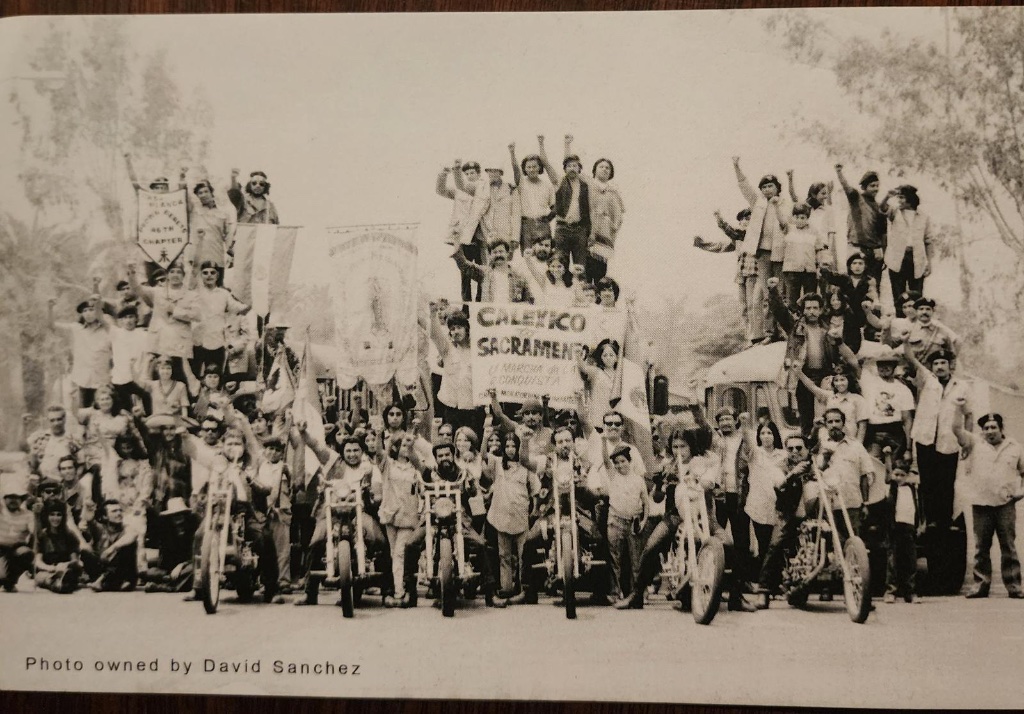
A 1,000-mile journey from Calexico to Sacramento to culminate with a rally in front of the state capitol — recruiting new Brown Berets for La Causa and raising awareness of the injustices plaguing our Raza.
The Occupation of Catalina Island
In a bold political statement, the Brown Berets occupied Santa Catalina Island, claiming it as rightful Mexican territory under land rights taken by — but not limited to — the Guadalupe Treaty, Homestead Act, and Land Act. The U.S. Navy brought a battleship and pointed its guns/cannons at the Brown Berets' Tecolote Camp site on Catalina Island.
Original Organization Disbanded
Under intense government surveillance, FBI COINTELPRO infiltration, and internal tensions partly caused by infiltrators, David Sanchez officially disbanded the original Brown Berets. However, the movement had already planted deep roots across the country.
Re-Established
Under the leadership, once again, of David Sanchez and Geronimo, the Brown Beret National Party re-established its ranks to address the War on Drugs, Police Brutality, the gang murder rate out of control, and the Chicano Identity that had been annihilated by the Establishment's infiltration of Academia — watering down Chicano Studies and creating divide-and-conquer through labels such as Latinx, Chicana-x, and Socialist/Communist ideologies — not Nationalist — undermining true liberation for Chicanos and Chicanas.
Brown Beret National Party Organization
Dr. David J. Sanchez, PhD formally established the Brown Beret National Party (BBNP) Organization — the national governing body uniting all chapters under one banner, one beret, and La Causa. The BBNP re-established the original nationalist structure of the movement and laid the foundation for today's nationwide network of chapters.
Brown Beret National Party
Today, the Brown Berets continue their mission through chapters across the United States. Brown Berets TV and this platform serve as the national hub for uniting all chapters under the Brown Beret itself and the Banner of La Causa. We need a National Campaign in Voter Registration and Voting — for Raza by Raza.
THE OCCUPATION OF CATALINA ISLAND
Land rights taken by — but not limited to — the Guadalupe Treaty, Homestead Act, and Land Act. The Brown Berets occupied Santa Catalina Island in a bold act of political defiance, asserting the rightful claim of the Mexican people to their ancestral land. The U.S. Navy brought a battleship and pointed its guns/cannons at the Brown Berets' Tecolote Camp site on Catalina Island — a stark show of force against a non-violent occupation. The action drew international media attention to the ongoing displacement of Mexican-American communities and remains one of the most dramatic and symbolic actions in the history of the Chicano Movement.
KEY ACCOMPLISHMENTS
Organized the East L.A. Walkouts of 1968 — one of the largest student protests in American history
Published La Causa newspaper, educating thousands on Chicano civil rights
Established the East L.A. Free Clinic, providing healthcare to underserved communities
Co-organized the National Chicano Moratorium of 1970 with 20,000+ marchers
Occupied Santa Catalina Island for 24 days, drawing attention to Mexican land rights
Fought against the Vietnam War's disproportionate impact on Chicano soldiers
Established community defense patrols against police brutality in barrios
Inspired generations of Chicano youth to organize and advocate for their rights
Created educational programs teaching Chicano history and cultural pride
Built coalitions with the American Indian Movement and other civil rights groups
HISTORIC IMAGES